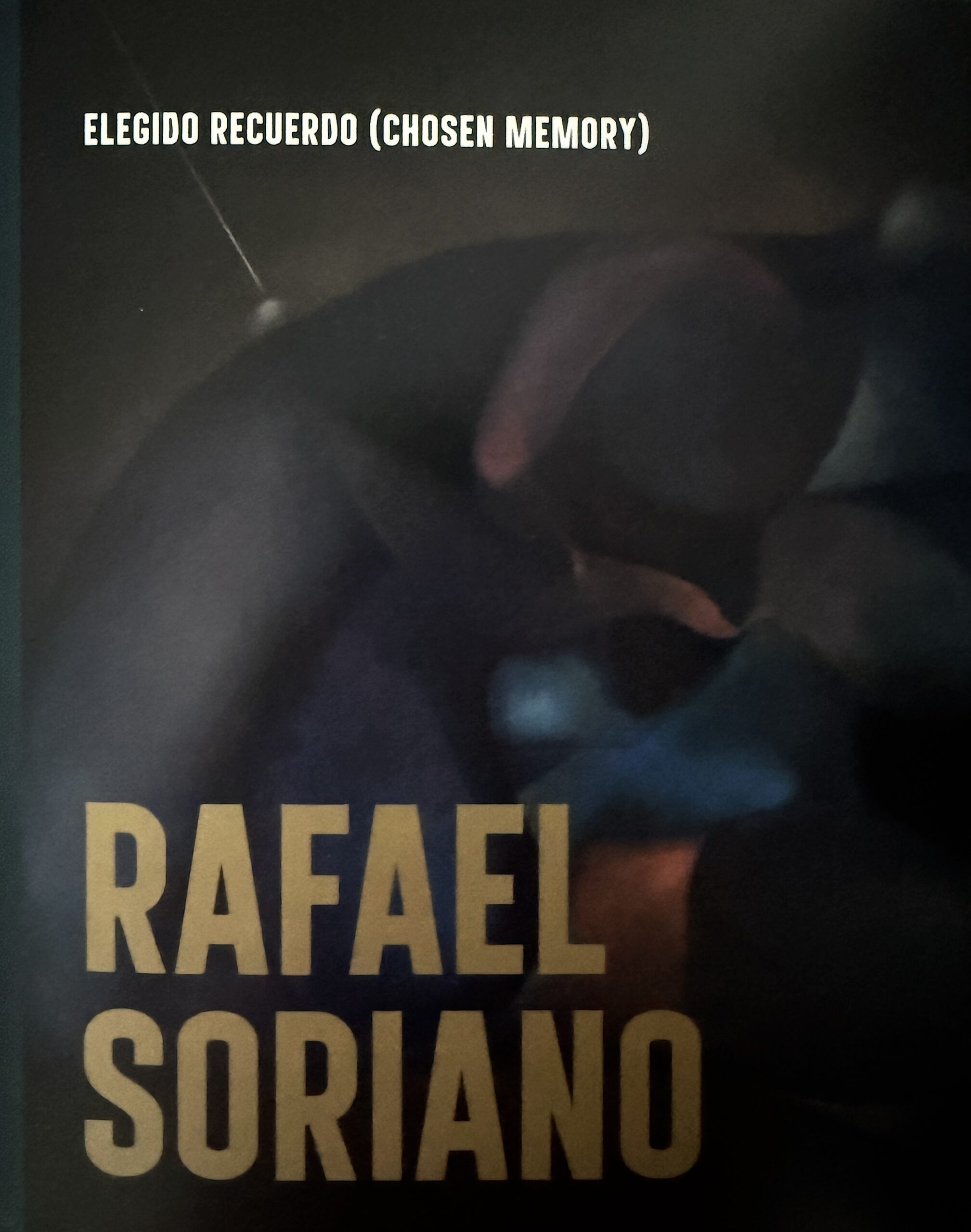
Anreus, Alejandro
Rafael Soriano | ELEGIDO RECUERDO
(CHOSEN MEMORY)
Exhibition Catalogue. Hollis Taggart Gallery, Chelsea, New York, 2025
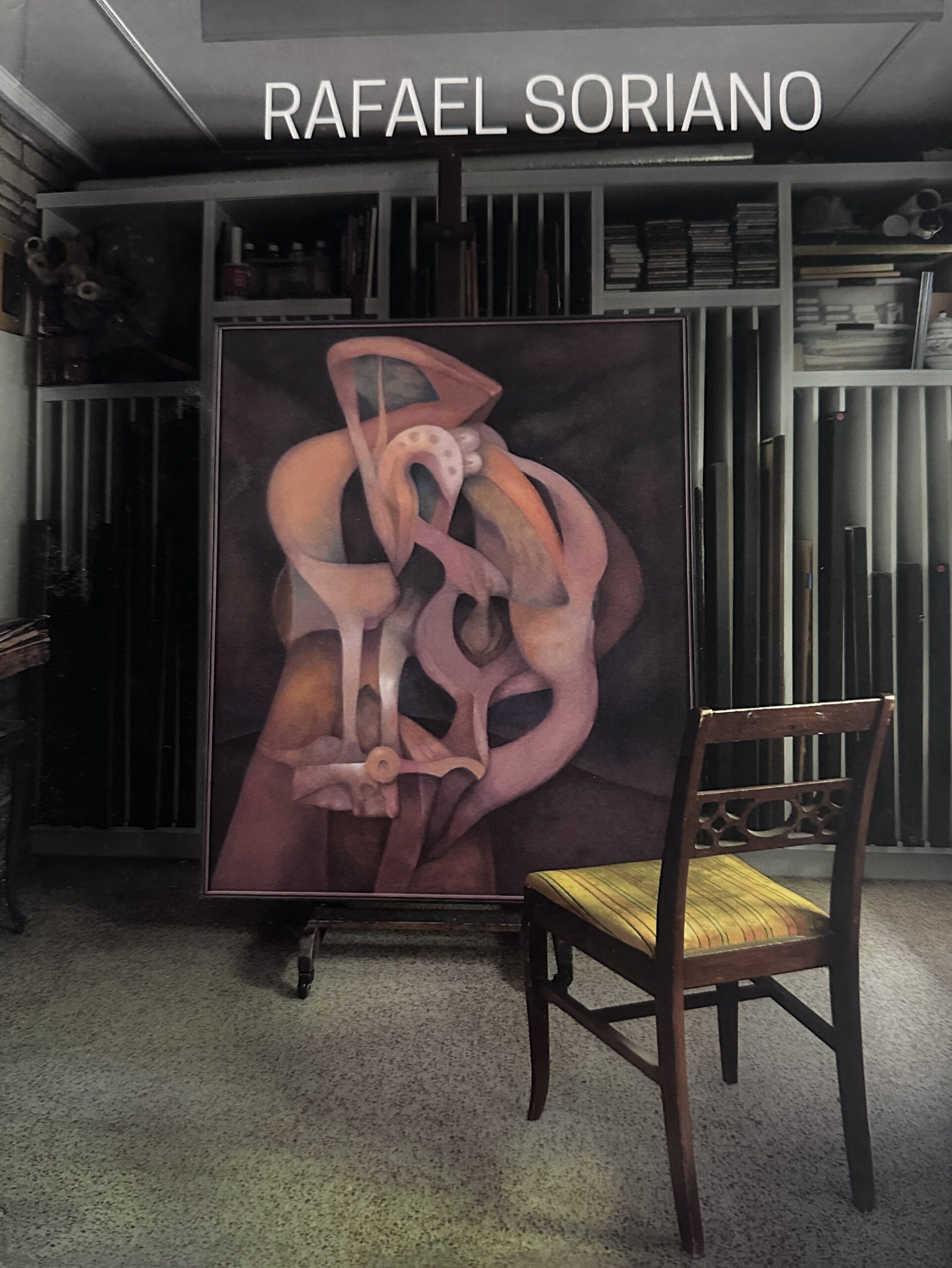
Anreus, Alejandro
Rafael Soriano | Transcendentalism Distilled
Exhibition Catalogue. LNS Gallery, Miami, Florida, 2022
Anreus, Alejandro
Evangelista, Kristen
Rafael Soriano: Cabezas (Heads)
Exhibition Catalogue (english/spanish). William Paterson University Galleries, WPU, Wayne, N.J., 2019
Goizueta, Elizabeth Thompson
Rafael Soriano | The Artist as Mystic
Exhibition Catalogue (english/spanish). McMullen Museum, Boston College, Boston, MA, 2017.
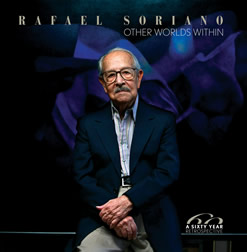
Other Worlds Within | A Sixty Year Retrospective
Exhibition Catalogue (english/spanish). Lowe Art Museum, University of Miami, Coral Gables, FL, 2011.

Orta, Gustavo
Rafael Soriano | Entre lo Místico y lo Espiritual
Exhibition Catalogue. Miami Dade College, Miami, FL, 2008..
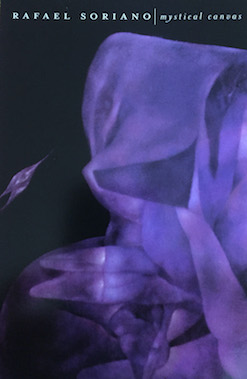
Rosado, Jesus
Mystical Canvas
The Olga and Carlos Saladrigas Gallery, Miami, FL, 2004.
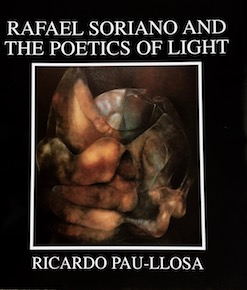
Pau-Llosa, Ricardo
Rafael Soriano and the Poetics of Light
Monograph. Miami: Ediciones Habana Vieja (English/Spanish) edition 1998.
Rafael Soriano | A One-Man Show
Exhibition Catalogue. De Armas Gallery, Virginia Gardens, FL, 1980..
BOOK MENTIONS
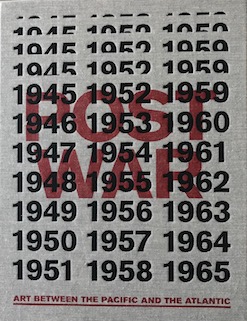
Ebwezor, Okwul, Siegel, Katy, Wilmes, Ulrich, eds.
Postwar: Art Between the Pacific and the Atlantic 1945-1965
Chronology: Arts and Culture. Much: Prestel & Haus Der Kunst, 2017..
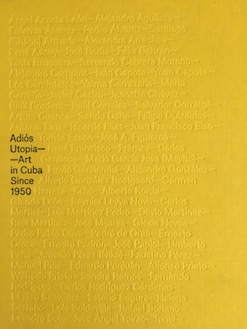
CIFO | Cisneros Foundation
Adiós Utopia—Art in Cuba Since 1950
CIFO | Cisneros Foundation. Miami, FL, 2017: 153
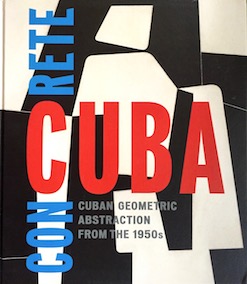
Zwirner, Lucas et al.
Concrete Cuba
Cuban Geometric Abstraction from the 1950s. New York, NY: David Zwirner Books, 2016.
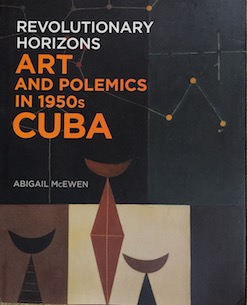
McEwen, Abigail
Revolutionary Horizons, Art and Polemics in 1950s Cuba
“Cuba’s Concretos and the Constructivist Turn.” Art and Polemics in 1950s Cuba. New Haven & London: Yale University Press, 2016: 46-48, 103,142, 144, 167, 171, 144-145.
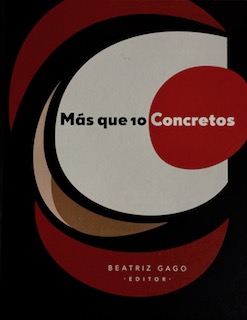
Gago, Beatriz
Más que 10 Concretos
“Catálogo, Rafael Soriano.” Madrid: Fundación Arte Cubano & Artes Gráficas Palermo, 2015: 143-155.
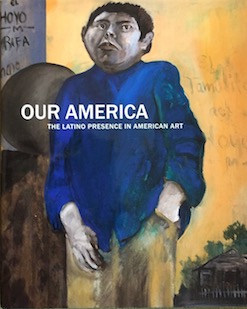
Ramos, Carmen E.
Our America, the Latino Presence in American Art
Washington, DC: Smithsonian American Art Museum in association with D Giles Limited, London. 2014: 70, 318-321.
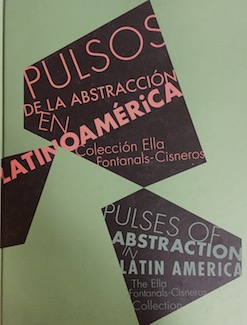
Fontanals-Cisneros, Ella
Pulses of abstraction in Latin America
Pulses of abstraction in Latin America, The Ella Fontanals-Cisneros Collection, 2012.
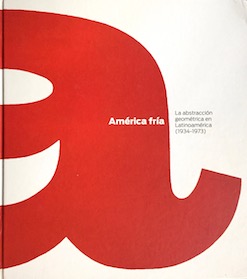
Fundación Juan March
América fria, La abstracción geométrica en Latinoamérica (1934-1973)
Fundación Juan March. Madrid, 11 de febreo al 15 de mayo de 2011: 290-291.
RAFAEL SORIANO
(1920–2015)
Rafael Soriano was born in 1920 in Cidra, in the province of Matanzas, Cuba, and demonstrated an early affinity for painting. After seven years of study at Havana’s prestigious Escuela Nacional de Bellas Artes San Alejandro, he graduated in 1941 as Professor of Painting, Drawing, and Sculpture. He then returned to Matanzas, where he taught visual arts for nearly two decades. Soriano was a founder—and later director—of the Escuela de Bellas Artes de Matanzas, the most important art school in Cuba outside Havana. During this period, he exhibited with Los Diez Pintores Concretos, a group associated with the development of geometric abstraction in Cuba and its dialogue with movements in Europe and the Americas.
In 1962, Soriano went into exile and settled in Miami with his wife, Milagros, and their daughter, Hortensia. He worked as a graphic designer and taught on occasion, first at the Catholic Welfare Bureau and later through the University of Miami’s Cuban Cultural Program. Throughout these years, he continued to paint tirelessly in the evenings.
Soriano distinguished himself from the vernacular themes that had dominated much of Cuban art since the emergence of the first avant-garde in the mid-1920s. During the 1950s, his work followed the path of geometric abstraction. By the late 1960s, however, his painting underwent a radical transformation. Geometric structures gave way to luminous, enigmatic forms shaped by emotion, meditation, and mystical introspection.
Through a singular treatment of light and color—and through the use of transparency, spatial ambiguity, and biomorphic form—Soriano entered a new aesthetic dimension, freeing his work from earlier attachments to specific schools or tendencies. His highly refined technique established him as a master of luminosity, pictorial metaphor, and the metaphysical language of form. In his complex images, light functions as both form and content. This unity of vision and representation constitutes Soriano’s distinctive contribution to contemporary visual discourse and has led scholars to recognize the universal significance of his work.
Since his first solo exhibition in 1947 at Havana’s Lyceum and Lawn Tennis Club, Soriano’s work has been presented in numerous solo exhibitions and more than 200 group exhibitions throughout the United States, Latin America, and Europe. His work is held in many private and public collections, including the Art Museum of the Americas, Organization of American States, Washington, DC; the Blanton Museum of Art, Austin, Texas; Bacardi Imports, Miami, Florida; Banco Bozano-Simonsen, Rio de Janeiro, Brazil; Continental Bank, Miami, Florida; the CIFO Collection, Cisneros Fontanals Art Foundation, Miami, Florida; the Denver Art Museum, Colorado; Galería de Arte Moderno, Santo Domingo, Dominican Republic; Grupo DEARMAS, Caracas, Venezuela; the Jane Voorhees Zimmerli Art Museum at Rutgers University, New Brunswick, New Jersey; the Long Beach Museum of Art, Long Beach, California; the Lowe Art Museum, Coral Gables, Florida; the McMullen Museum of Art at Boston College, Boston, Massachusetts; the Museo de Arte de Matanzas, Cuba; Museo de Arte de Zea, Medellín, Colombia; the Museo Nacional de Bellas Artes, Havana, Cuba; NationsBank Corporation, Charlotte, North Carolina; NSU Art Museum Fort Lauderdale, Florida; the Patricia & Phillip Frost Art Museum, Miami, Florida; the National Gallery of Art, Washington, DC; the Whitney Museum of American Art, New York, New York; Pérez Art Museum Miami, Florida; and the Smithsonian American Art Museum, Washington, DC.